
Electric or Manual Fowler Bed? What Hospitals Should Compare Before Choosing
Electric and manual Fowler beds can both be appropriate for patient care. The better choice depends on repositioning frequency, nursing workflow, power availability, maintenance, safety, mobility and the hospital’s long-term operating environment.

What to remember
- Electric Fowler beds reduce the physical effort needed for repeated backrest and knee-rest adjustments.
- Manual Fowler beds remain practical where simplicity, power independence and maintainability are priorities.
- Hospitals should compare workflow, rails, panels, castors and braking—not only the adjustment mechanism.
- The frequency of patient repositioning should influence whether powered adjustment provides meaningful value.
- Lifecycle maintenance and serviceability can matter as much as the initial purchase price.
Table of contents
- First, What Does a Fowler Bed Actually Do?
- Electric and Manual Fowler Beds Solve the Same Basic Problem Differently
- 1. Ask How Often the Bed Will Be Repositioned
- 2. Nursing Workflow Should Be Part of the Procurement Decision
- 3. Electricity Is an Advantage Until It Becomes a Dependency
- 4. Maintenance Changes the Long-Term Equation
- 5. Do Not Let “Electric” Distract From the Rest of the Bed
- 6. Side Rails Need Their Own Evaluation
- 7. Panel Material Is More Than an Appearance Choice
- 8. Mobility and Braking Should Not Be Treated as Minor Details
- 9. Electric Fowler Bed Does Not Mean ICU Bed
- 10. Manual Does Not Necessarily Mean Basic Patient Care
- 11. Electric Does Not Automatically Mean Lower Nursing Workload Everywhere
- 12. Think in Terms of Total Cost, Not Only Purchase Cost
- A Practical Procurement Checklist
- My View: Match the Mechanism to the Workload
When hospitals buy patient beds, it is easy to assume that an electric model must automatically be the better choice. It is newer, easier to adjust and usually looks more advanced on a specification sheet.
But after working around hospital furniture and institutional requirements, I think the more useful question is different:
How often will the bed actually be adjusted, who will operate it, and what type of infrastructure will support it throughout its working life?
That question matters particularly when comparing an electric Fowler bed with a manually operated Fowler bed.
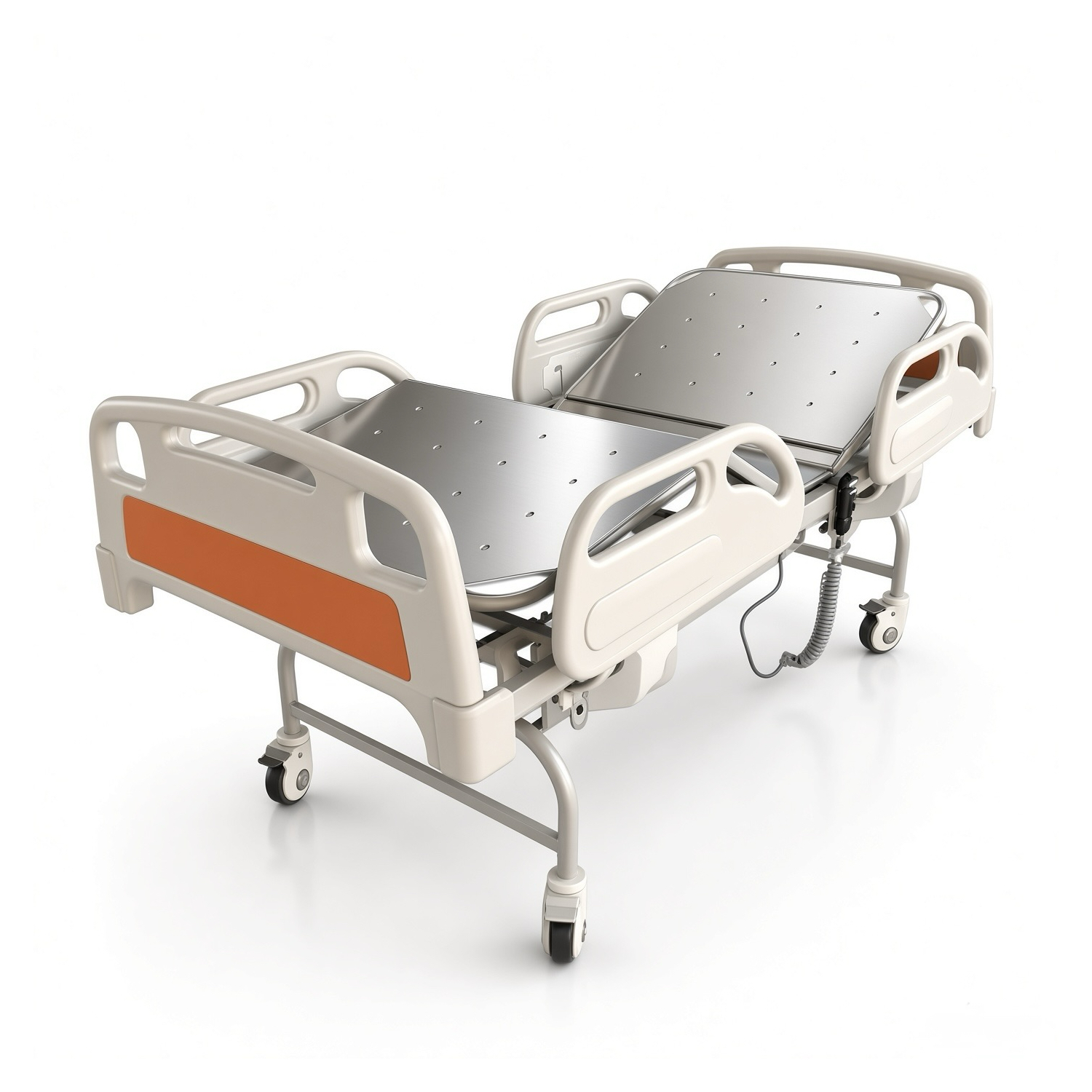
Both are designed around a similar clinical idea: the patient does not always need to remain completely flat. A Fowler bed provides adjustable sections that can change upper-body and knee support. What changes significantly between models is how those movements are produced and what additional construction is supplied around them.
First, What Does a Fowler Bed Actually Do?
A Fowler hospital bed normally provides more positioning flexibility than a plain hospital bed. In the configurations I am discussing here, the important adjustable sections are the backrest and knee rest.
Raising the back section changes upper-body support. Adjusting the knee-rest section changes the configuration beneath the patient's legs. The appropriate patient position should always depend on the patient's condition, comfort, treatment requirements and instructions from qualified healthcare professionals.
The bed provides the positioning capability. It does not determine the clinical decision.
This distinction is important because buyers sometimes concentrate so heavily on terminology such as “Fowler”, “electric” or “two-function” that they forget to confirm exactly which sections move and how those movements are controlled.
Electric and Manual Fowler Beds Solve the Same Basic Problem Differently
An electric Fowler bed uses powered actuators to operate its adjustable sections. A hand control allows the backrest and knee rest to be repositioned without turning mechanical cranks.
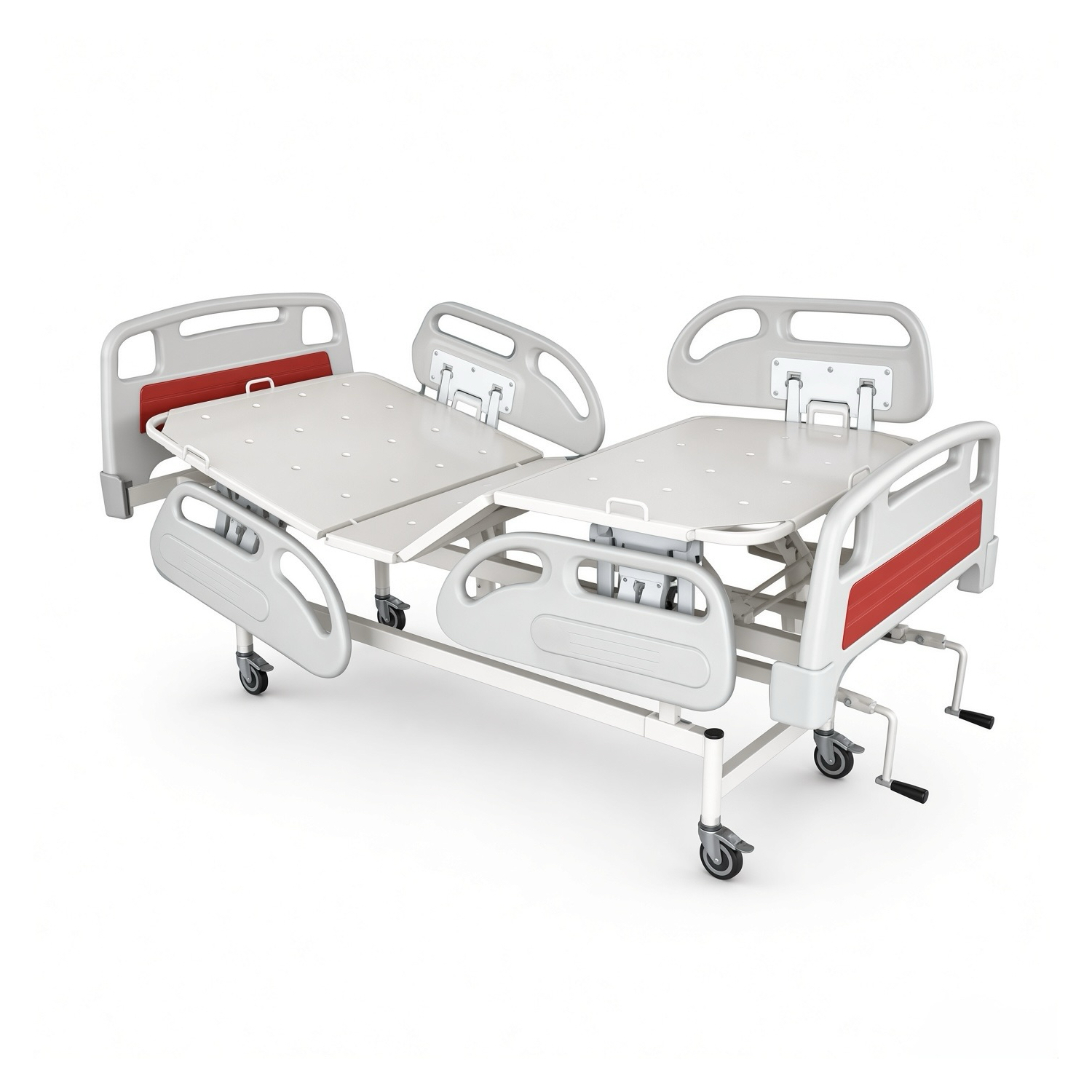
A manual Fowler bed provides similar fundamental positioning through a mechanical system. Staff use crank or screw mechanisms to raise or lower the relevant sections.
At first glance, this appears to make the decision simple: electric is easier, so buy electric.
In reality, hospital procurement is rarely that simple.
Ease of adjustment is important, but so are frequency of use, nursing workflow, reliability, electrical infrastructure, maintenance capability, spare parts and purchase budget.
1. Ask How Often the Bed Will Be Repositioned
This is probably the first question I would ask.
If nurses are adjusting the patient's back and knee position repeatedly throughout the day, powered operation can remove a considerable amount of repetitive manual work. The benefit becomes more noticeable when the hospital has many beds and repositioning is part of routine ward activity.
With an electric Fowler bed, the caregiver can operate the specified movements using the control system rather than walking to the foot end and operating separate mechanical handles.
But the situation can be different in a ward where adjustment is relatively infrequent.
If a patient is positioned only occasionally and the bed spends most of its time in one configuration, the practical advantage of electrical actuation may be smaller.
This is why I would not decide between electric and manual Fowler beds only by comparing technology. I would first examine frequency of use.
2. Nursing Workflow Should Be Part of the Procurement Decision
Hospital furniture is used by patients, but it is operated and managed largely by healthcare workers.
That makes nursing workflow an important part of bed selection.
Powered adjustment can make routine repositioning more convenient, particularly when staff need to change both backrest and knee-rest positions regularly.
Manual mechanisms require the caregiver to operate a crank. That is straightforward technology, but repeated adjustment naturally requires more physical interaction with the bed.
That does not automatically make the manual system unsuitable. It simply means the hospital should understand the staff workload associated with it.
For a small facility with limited repositioning requirements, the difference may be perfectly acceptable. In a high-turnover ward with frequent adjustment, powered controls may provide substantially more operational convenience.
3. Electricity Is an Advantage Until It Becomes a Dependency
Electric Fowler beds need an electrical system to operate their powered functions.
In a modern hospital with dependable electrical infrastructure, appropriate sockets and suitable maintenance support, this may present little difficulty.
But hospitals do not all operate under identical conditions.
Some healthcare facilities experience unstable power supply. Some operate in locations where biomedical maintenance support is limited. Others may deliberately prefer equipment that can continue to perform its fundamental mechanical function without relying on electrical components.
A manual Fowler bed can adjust its published positioning sections without mains electricity, powered actuators or electronic hand controls.
That simplicity should not automatically be interpreted as inferior technology. In some operating environments, independence from electrical actuation can itself be useful.
4. Maintenance Changes the Long-Term Equation
The purchase price is visible on day one. Maintenance cost appears gradually over several years.
An electric hospital bed introduces components that are not required in a purely mechanical model: actuators, controls, wiring and associated electrical parts.
Those components provide convenience, but hospitals should also ask practical questions before buying large quantities.
Who will service the bed if an electric adjustment stops working? Are spare parts available? Can the actuator or hand control be replaced? Does the facility have biomedical technicians who are comfortable troubleshooting powered beds?
Mechanical beds introduce a different maintenance profile. They still contain moving components, linkages, crank systems, castors and other parts that require inspection and care, but there are fewer electrical elements involved in the positioning system.
For me, this is one of the strongest arguments for evaluating Fowler beds on lifecycle suitability rather than purchase price alone.
5. Do Not Let “Electric” Distract From the Rest of the Bed
The adjustment mechanism is only one part of the product.
A hospital still needs to examine the framework, mattress platform, head and foot panels, side rails, castors, brakes, IV-pole provision, dimensions and other supplied components.
Two beds can both be called Fowler beds while having noticeably different construction.
For example, models may use moulded ABS panels, stainless-steel or laminated panel arrangements, different safety-rail configurations and different mobility systems.
A procurement specification should therefore never stop at a line such as:
“Fowler bed — electric.”
That description is far too broad for a controlled institutional purchase.
6. Side Rails Need Their Own Evaluation
Side rails are visually prominent, so buyers naturally notice them. But their evaluation should go further than whether the bed simply “has rails”.
Hospitals should confirm the rail material, operating design, bedside accessibility and how the rails interact with the mattress platform.
Staff should also understand how the selected rail system is raised, lowered or otherwise operated according to the particular model.
Side rails are one component of the patient-support environment. They should not be treated as a complete fall-prevention system by themselves. Their use needs to follow patient assessment and the healthcare facility's applicable safety procedures.
7. Panel Material Is More Than an Appearance Choice
Fowler beds can also differ significantly in their head and foot construction.
Some models use moulded ABS components, while other configurations use stainless-steel tubular structures with laminated or other panel arrangements.
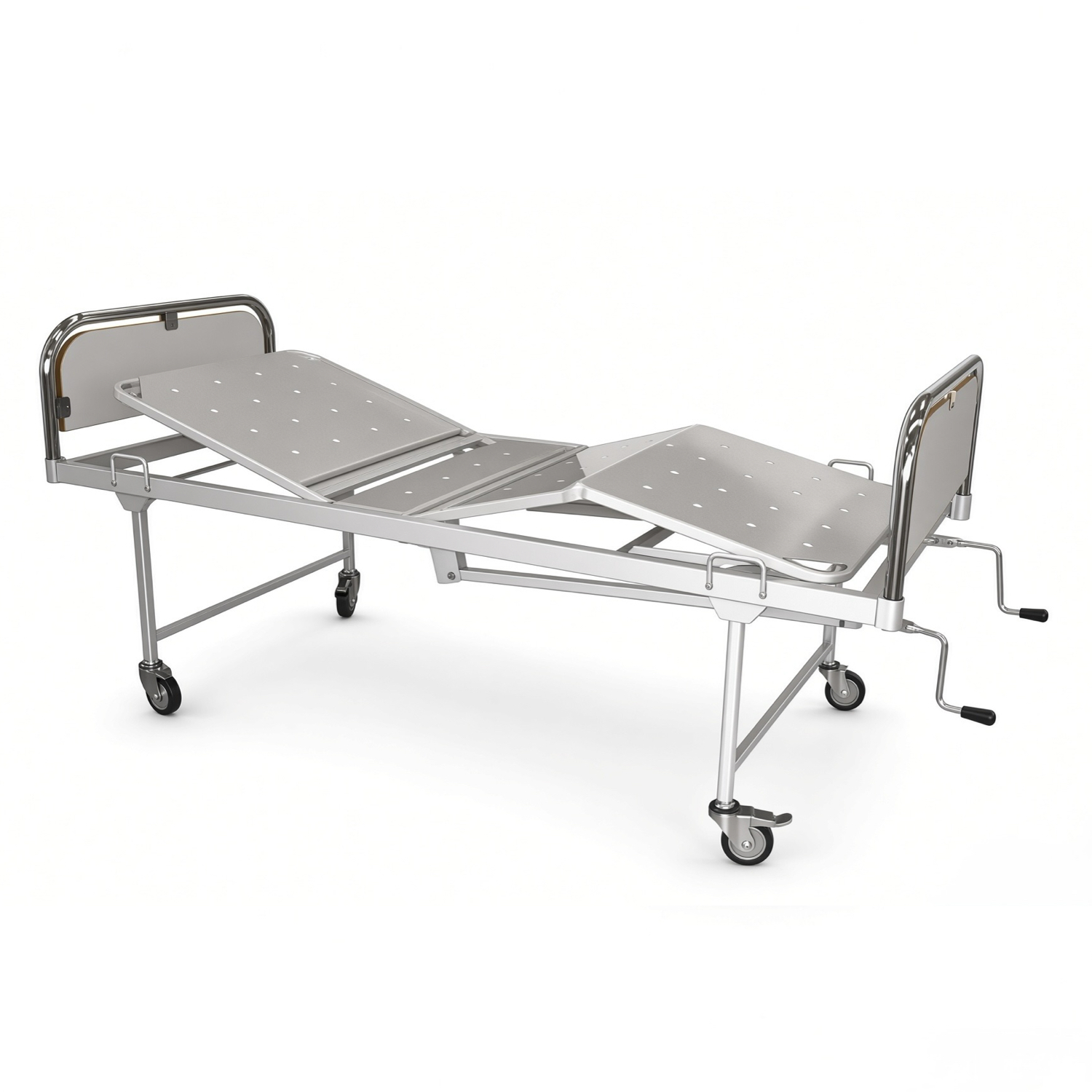
The correct choice may depend on the hospital's cleaning practices, appearance requirements, maintenance preferences, existing ward standardisation and procurement specification.
What matters is that the material and construction are intentionally selected rather than assumed from the words “Fowler bed”.
8. Mobility and Braking Should Not Be Treated as Minor Details
Beds may need to move for cleaning, room rearrangement, patient transfer or other operational reasons.
Castor diameter, wheel quality and braking configuration can therefore have a significant effect on everyday usability.
Procurement teams should confirm exactly how many castors are braked and whether the model uses individual brakes or another braking arrangement.
This is particularly important when several visually similar models are being compared because the braking system may not be identical across them.
The hospital should also consider its real environment: flooring, doorways, corridors, lift dimensions and the available space around each patient bed.
9. Electric Fowler Bed Does Not Mean ICU Bed
This distinction is worth making because the terms are sometimes used too loosely.
An electric Fowler bed may provide powered backrest and knee-rest adjustment while remaining at a fixed overall bed height.
A more advanced ICU bed may additionally provide functions such as variable Hi-Lo height, Trendelenburg, Reverse Trendelenburg, advanced caregiver controls or other model-specific features.
The presence of an electric actuator therefore does not make every electrically adjustable hospital bed equivalent.
Hospitals should specify the movements actually required rather than purchasing simply according to whether the product is described as electric.
10. Manual Does Not Necessarily Mean Basic Patient Care
There is also a tendency to describe mechanical beds as though they belong only in low-resource environments.
I do not think that is a useful way to classify them.
A mechanically adjustable Fowler bed can still provide meaningful positioning flexibility. It can incorporate a multi-section patient platform, adjustable backrest, adjustable knee rest, rails, panels, IV provision, castors and brakes depending on the particular configuration.
The difference is principally that the adjustable sections are operated mechanically rather than through electric actuators.
For some facilities, that is exactly what they want.
11. Electric Does Not Automatically Mean Lower Nursing Workload Everywhere
Powered adjustment can certainly reduce the physical action required to move the bed sections, but overall nursing workload depends on much more than one control system.
Bedside access, rail operation, patient dependency, room layout, mattress choice, monitoring requirements and staffing patterns all influence how efficiently care can be delivered.
An electric bed placed in a poorly designed room does not automatically create an efficient workflow.
Likewise, a well-selected manual bed used in an appropriate environment can remain practical.
The bed has to be evaluated as part of the complete ward system.
12. Think in Terms of Total Cost, Not Only Purchase Cost
Manual beds will often attract attention when procurement budgets are tight because their mechanism is simpler.
Electric beds may justify a higher acquisition cost where powered repositioning provides repeated operational value.
But neither comparison should end with the invoice.
Hospitals should consider expected service life, maintenance requirements, spare parts, technician availability, likely usage intensity and the cost of downtime when a bed cannot perform its intended function.
A cheaper bed that does not suit the workflow can become expensive operationally. An expensive bed filled with features the ward rarely uses can also represent poor value.
Value therefore comes from matching equipment capability to actual need.
A Practical Procurement Checklist
Before choosing between an electric and manual Fowler bed, I would want the hospital procurement team to answer the following questions:
- Which patient-care area will use the bed?
- How frequently will backrest and knee-rest positions be changed?
- Who will normally operate those adjustments?
- Is electric operation required, preferred or unnecessary?
- What happens during a power interruption?
- What maintenance capability exists within the hospital?
- What panel material is required?
- Are side rails required, and what configuration is appropriate?
- What castor and braking arrangement is required?
- What overall dimensions are suitable for the room, doors and lifts?
- Which IV-pole or accessory provisions are needed?
- Is the mattress included, or must it be specified separately?
- What spare-parts and after-sales support will be available?
Answering these questions usually tells the buyer far more than simply asking for the “best Fowler bed”.
My View: Match the Mechanism to the Workload
If I had to reduce the electric-versus-manual Fowler-bed decision to one principle, it would be this:
The adjustment mechanism should match how frequently and intensively the hospital expects to use it.
Where patients require regular repositioning and nurses operate the bed repeatedly throughout the day, electric adjustment can provide meaningful convenience.
Where adjustments are less frequent, electrical infrastructure is uncertain, maintenance simplicity is important or procurement requirements favour mechanically operated equipment, a manual Fowler bed can remain a practical choice.
Neither mechanism should be selected merely because it appears more modern or costs less.
Hospitals should look at the full bed: positioning, controls, rails, panels, mobility, braking, dimensions, maintenance and the actual ward environment.
That is ultimately the difference between purchasing a piece of hospital furniture and specifying equipment for a real patient-care workflow.
Author disclosure: The author works in the medical-equipment manufacturing sector with IndoSurgicals Private Limited. IndoSurgicals product photographs are used here to illustrate different Fowler-bed configurations. The discussion is intended as a general procurement and equipment-selection perspective and does not recommend a particular product or brand for an individual patient or healthcare facility.
Examples of the different configurations discussed in this opinion can be viewed in the IndoSurgicals Fowler Beds range . Hospitals should confirm the current product page, quotation and model-specific specification before procurement.
How did this opinion land?
Kumar Akhil Yadav
Director at IndoSurgicals Private Limited


Comments
Sign in to share your opinion on this article.
Be the first reader to contribute to this discussion.